
Every football player has one goal – to play in a FIFA World Cup. Sure, they dream about putting on their favourite club’s kit and winning the Champions League but the World Cup is an altogether different spectacle.
Bonus: Do you know which player is playing in his fifth World Cup?
#1 Lionel Messi (Argentina)
With five Ballon d’Ors and countless other records to his name, there is no doubt that Lionel Messi will go down in history as one of the greatest footballers of all time. But when he swaps the Blaugrana shirt for the blue-white stripes of Argentina, it is a different story altogether.
Messi may have been found weeping in the dressing room after he was sent off on his international debut in 2005 but he did make the squad for the 2006 World Cup. Although he started on the bench, he would make his World Cup debut against Serbia and Montenegro to become the youngest player ever to put on an Argentina shirt at a World Cup.
2010 saw him play under Diego Maradona himself who deployed him as a withdrawn forward – almost like a playmaker – where he excelled. Messi played creator more than goalscorer but it was the defence that proved to be their downfall, losing to Germany yet again in the quarter-finals.
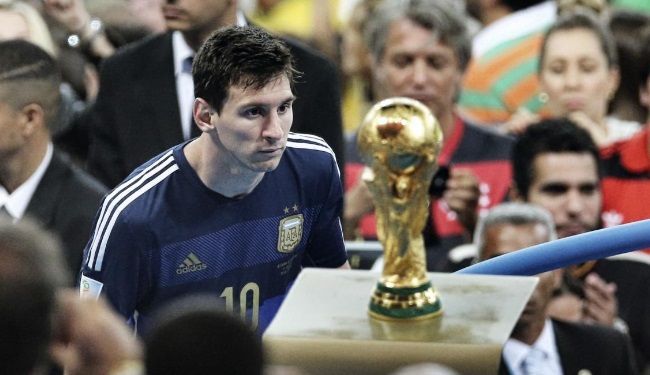
Although Messi did win the Golden Ball, his sombre expression as he received the trophy suggested he really did not care for trinkets after he had lost out on the biggest trophy of all.
#2 Tim Cahill (Australia)
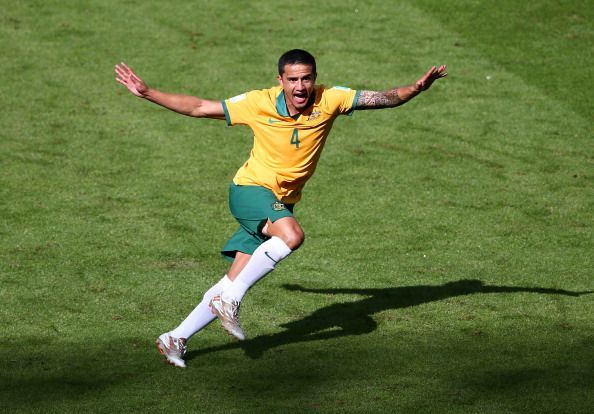
Australia were one of the last few teams to announce their squad for the 2018 FIFA World Cupand when they finally did, one name stood out. Their prized forward – Tim Cahill. The man of the corner-flag-punching-goal-celebration fame.
Although 2006 was Australia’s second ever participation at a World Cup (they qualified way back in 1974), Cahill made history when he became the first Australian to score a World Cup goal. They could have gone far that year had they not been “robbed” by Italy in the Round of 16.
#3 Sergio Ramos (Spain)
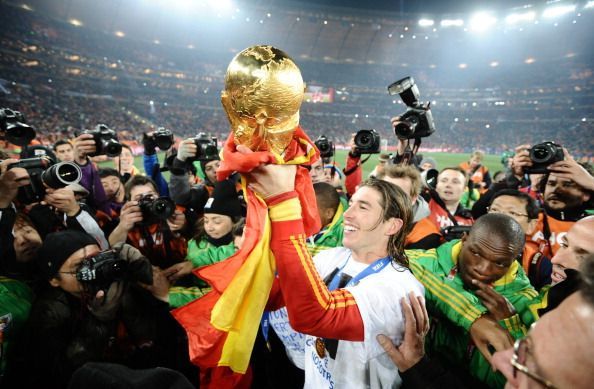
Now 32 and possibly playing in his final FIFA World Cup, Ramos has come a long way with Spain. He first made his debut as an 18-year-old; becoming the youngest Spaniard to make his debut at the time.
Back then Ramos was a right-back. It wasn’t until 2012 that he became Spain’s preferred centre-back once Carles Puyol was no longer in the frame. Ramos played a key role in the 2010 World Cup, playing almost every minute as Spain romped to their first ever World Cup triumph.
#4 Andrés Guardado (Mexico)
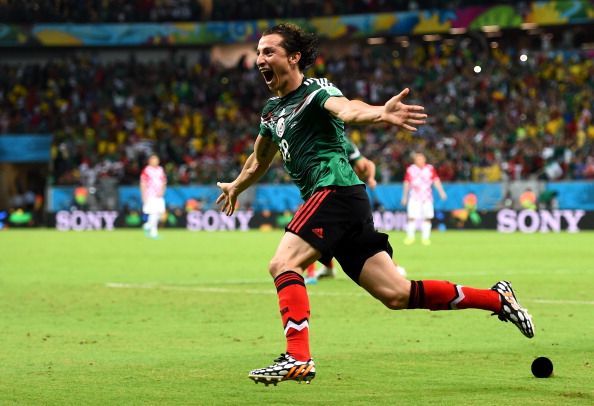
2006 was when a young 19-year-old Andrés Guardado made his first FIFA World Cup appearance. Mexico did not go far, losing to Argentina in extra-time in the Round of 16, but Guardado had done enough to stake a claim to a spot in the lineup.
The 2014 World Cup finally saw him play a more crucial role, even managing to score against Croatia to help El Tri reach the knockout stages. They were in for heartbreak, though, as Arjen Robben’s dive for a late, late penalty had seen to their exit.
#5 Javier Mascherano (Argentina)
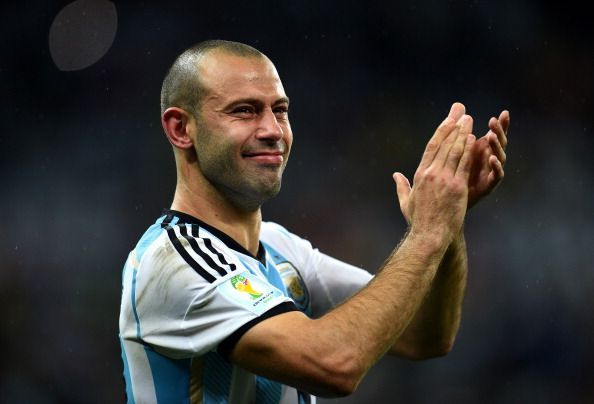
El Jefecito (The Little Chief) made his FIFA World Cup debut in 2006, playing every minute of the Albiceleste‘s campaign. He would only go up from there, replacing Javier Zanetti as the captain and leading them under Maradona in the 2010 World Cup.
“I want Mascherano to be my captain because I believe he is the Argentinian player who is closest to the idea I have about the Argentinian shirt – sweat for it, sacrifice for it, being a professional, being close to the team-mate.” – Maradona
He will be 34 when the tournament gets underway and this will definitely be his last.
#6 Guillermo Ochoa (Mexico)
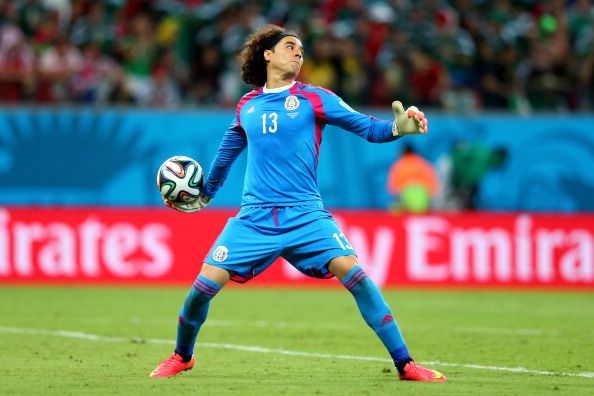
Mexican goalkeeper Guillermo Ochoa is now 32 and headed to his fourth FIFA World Cup. Everyone remembers him from his heroics in the 2014 edition – especially when he managed to keep a clean sheet against the mighty Brazilians playing on home turf.
“It was the game of my life,” he said after the game and even the internet went wild with tributes and memes flowing in equal measure with his Wikipedia entry even describing him as the Mexican Jesus.
#7 Andres Iniesta (Spain)
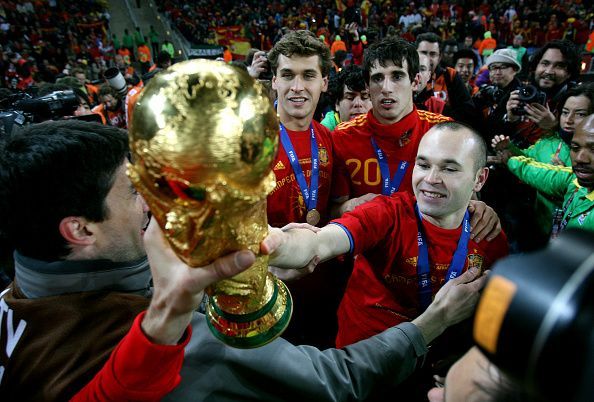
The man was adored wherever he played in Spain after scoring the winner in the 2010 FIFA World Cup final. He received a standing ovation wherever he went and rightly so – even by derby rivals Espanyol who he endeared himself to by paying tribute to their captain Dani Jarque who had passed away before the tournament.
In 2006, he was a rookie, playing just one game after they had sealed qualification to the knockout stages. 2010 was when he came of age despite injury fears almost keeping him at home. He overcame them all to eventually triumph and give Spain their first ever title.
#8 Valon Behrami (Switzerland)
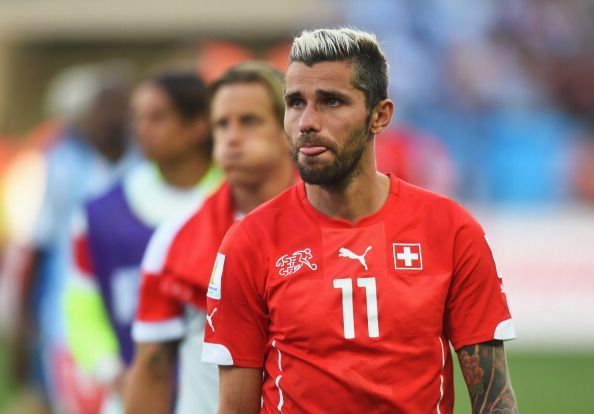
Although Valon Behrami has made it to three different World Cup tournaments, he didn’t exactly make the most of his chances. Although he will go down in history as one of many elite players to play in four World Cups, he will also be remembered as the first Swiss player to be sent off in a FIFA World Cup.
2010 saw his World Cup outing come to a premature end when he was sent off in the game against Chile. Getting a little too physical to retain the ball, Behrami appeared to elbow Arturo Vidal in the face and both the linesman and referee saw it as a foul.
#9 Cristiano Ronaldo (Portugal)
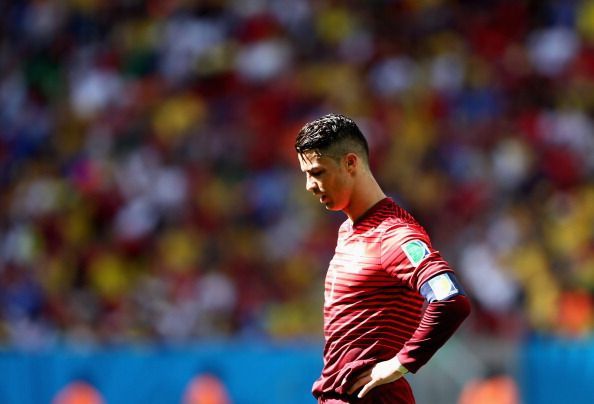
While he was making it large at Manchester United and Real Madrid, his travails at international tournaments have seen a different range of emotions. From tears in Euros to the wink in the World Cup when he got club teammate Wayne Rooney sent off, we’ve seen it all.
2014 saw him coming into the FIFA World Cup carrying an injury. He wasn’t 100% fit with a career-threatening tendinitis and thigh injury forcing him to skip training sessions – something a player of his stature hated.
Rafael Márquez (Mexico) – FIFTH World Cup
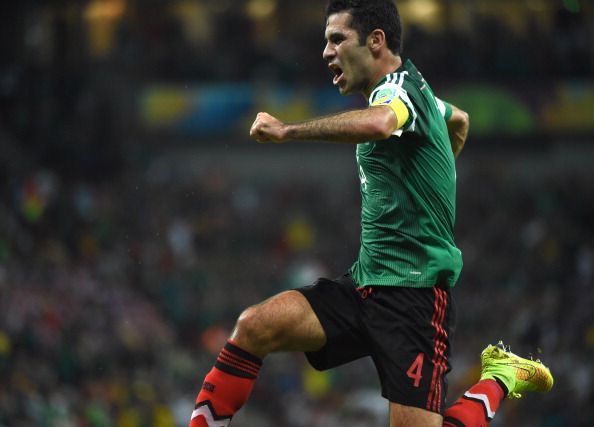
Mexico took a while to announce their 23-man squad but when they did, Marquez was one of the first players to be named. Aged 39, this will be his final outing. He has already retired from club football and did say that the FIFA World Cup would be the last time he wore an El Tri shirt.
He did play an active role in 2010 and in 2014 he became the first player to captain a national team in four different World Cups. He could have made it five but this time Mexico will be led by Andres Guardado.
