

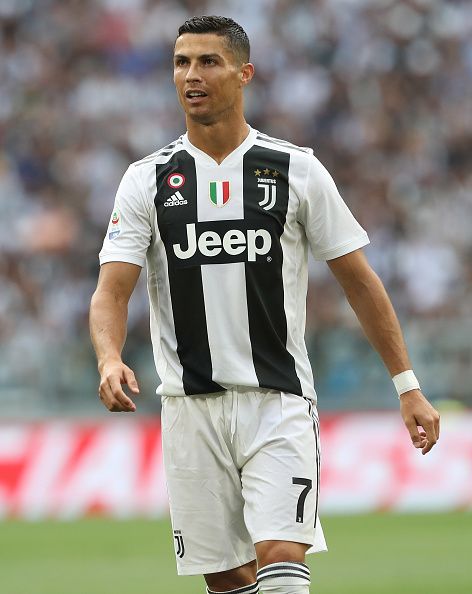
The 2018 edition of the UEFA Awards would take place on Thursday August 30 during the draws for this season’s Champions League group stage to be held in Monaco.
UEFA earlier released a shortlist of three nominees comprising World Cup Golden Ball winner Luka Modric, Last season’s Premier League highest goalscorer Mo Salah and current holder Cristiano Ronaldo.
#3 Champions League performance has always been used to determine the winner of this award
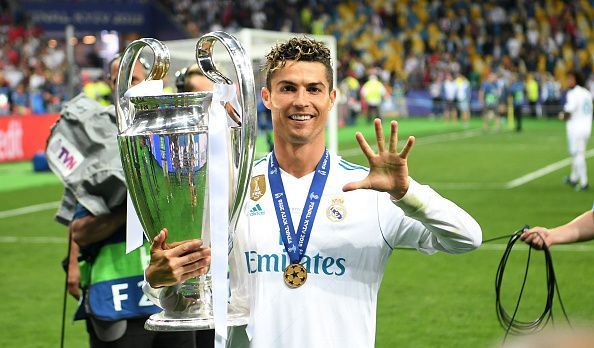
Traditionally, this award has always be given to the best performing player in European club competitions, with Ronaldo’s win in 2014, despite his group stage exit at the World Cup in Brazil being a prime example.
Ronaldo de Lima won the inaugural edition in 1998 largely for his extraordinary performances in helping Inter win the UEFA Cup rather than for his efforts at the World Cup even though he also impressed in France. Four years later was a more glaring example, as Zinedine Zidane’s performances in Real’s Champions league victory helped him win the award despite being the talisman of a shambolic performance by defending champions France in Korea/Japan where they became the first World Cup holders to be eliminated in the group stage. In 2006, after guiding Barcelona to its second UCL crown, Ronaldinho won the award, notwithstanding his underperformance with Brazil in Germany, ditto Diego Milito in 2010.
He incredibly won the Golden Boot for the sixth consecutive season (sharing the 2015 edition with Neymar and Messi), and set a new record for being the first player to score in all group stage matches in a season.
He also went further, becoming the first player to score in the first eight matches of a Champions League season, en route setting the all time record of scoring in 11 consecutive Champions League matches, which were crucial as Real Madrid secured its third consecutive Champions League crown and 13th overall.
Cristiano Ronaldo outperformed both Luka Modric and Mo Salah in last season’s Champions League, and for that reason he should be named UEFA Men’s Best Player on Thursday.
#2 The increase in number of individual awards means there are other opportunities for Modric and Salah
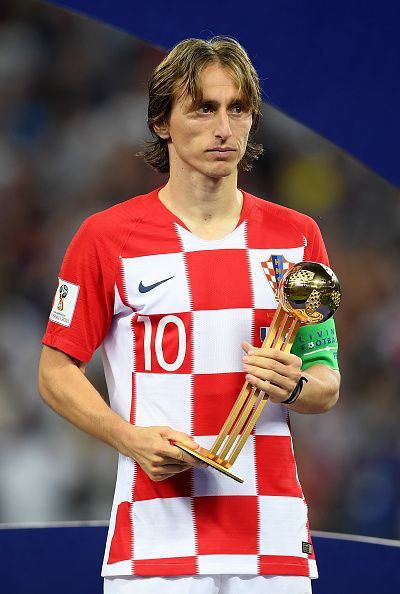
The merging of the Ballon d’Or with the FIFA award, together with Ronaldo and Messi’s otherworldly performance over the course of a nine month season meant that it was always going to be a tough ask for any player to dethrone them on the basis of seven matches at the World Cup.
Criticisms were raised, and rightly so, as historically, all individual awards in a World Cup year used to go to the best performing player at the World Cup, regardless of his performances elsewhere. A good example of this would be hitherto unknown Salvatore Schillacci who finished as runner up to Lothar Matthaus in the 1990 Ballon d’Or awards on the back of his Golden Boot and Golden Ball winning performance at Italia ’90.
However, for the UEFA Best Men’s Player award, they should each take the backseat and allow Ronaldo glow in the euphoria of lifting the individual trophy for the third consecutive season.
#1 The best player in winners of club competitions gets awarded
It is a no brainer that the winners of club tournaments should be rewarded, and for better or worse, the man who was most responsible for their performance is usually decided as the best player of the tournament. Deco with Porto in 2004, Fernando Redondo with Real Madrid in 2000, Stefan Effenberg with Bayern in 2001, and more recently Ronaldo or Messi whenver Barcelona or Real wins the UCl, it is a trend that has been practiced for a long time, and one which should not be stopped now.
His 15 UCL goals last season were extremely crucial in Real retaining their European crown, coming at important times when Real Madrid needed them, including a hat-trick at the Allianz stadium in Turin in a 3-0 victory over Juventus, one of which was a stunning overhead kick, which got him a standing ovation from the Juventus fans, and was recently voted as the UEFA goal of the season. He later showed great composure amidst chaotic scenes to bury a stoppage time penalty ensuring Real’s progression, after Juventus had rallied back from three goals down to level the tie on aggregate in the second leg at the Bernabeu.
