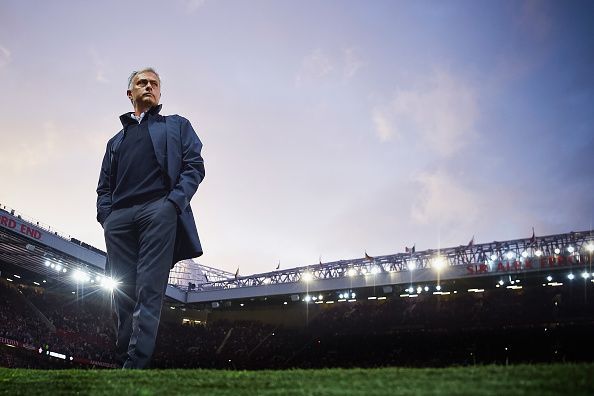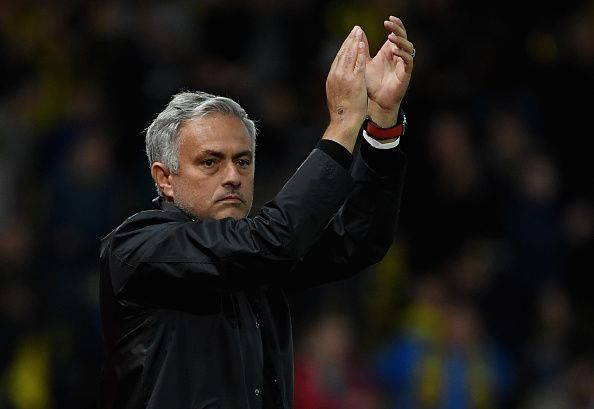
The world of football has been a witness to its fair share of characters over the years. Words went around about a certain Special One, Jose Mourinho. The Portuguese, who has divided opinion ever since his bow in European football, once again has the eyeballs of the whole world fixed on him.
With him enduring a sticky spell at the Theatre of Dreams, there are a number of questions fans and pundits want answers to. The most pressing one: Did Mourinho always have the shortcomings which have latently surfaced at Manchester United or is it something he has developed over time?
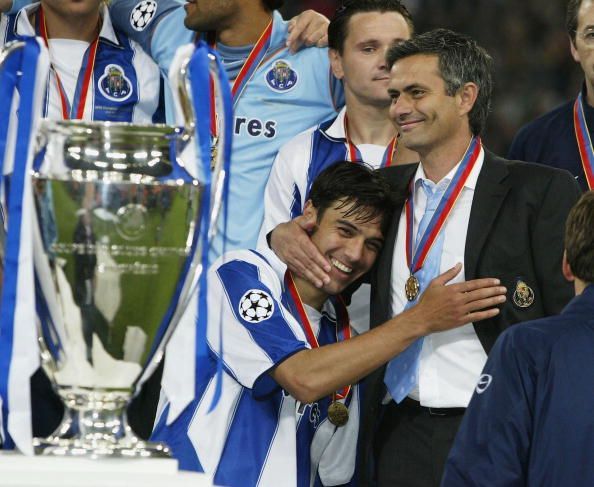
Mourinho shot to prominence with his spell at FC Porto, whom he led to several domestic titles and a Champions League crown in 2004. At the Estadio Do Dragao, Mourinho worked with relatively unheralded players and put those players on the footballing map.
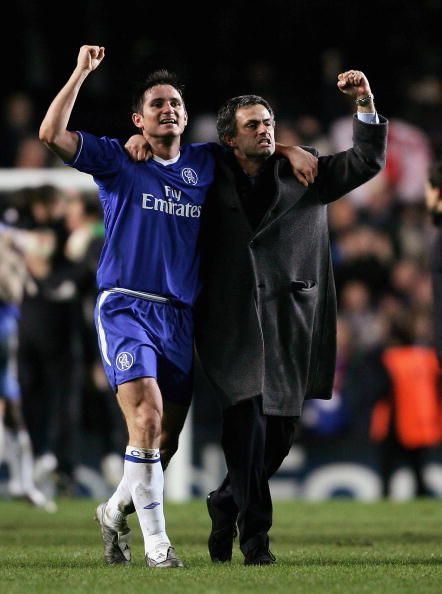
The likes of Cech, Terry, Lampard and Drogba compete in a shortlist to be crowned Chelsea’s greatest players in the modern era. The Mourinho at Chelsea didn’t have any ego clashes with the players. The players backed him till his last day in-charge and were disheartened when he left due to frosty relations with the owner.
While Jose had ‘created’ a strong team at Chelsea using young players, in Italy, he brought out the best in the experienced heads like Sneijder, Eto’o, Lucio and Milito, who fired on all cylinders. Thus, after his success in three different European environments, many believed that he had cast himself as the man for all seasons.
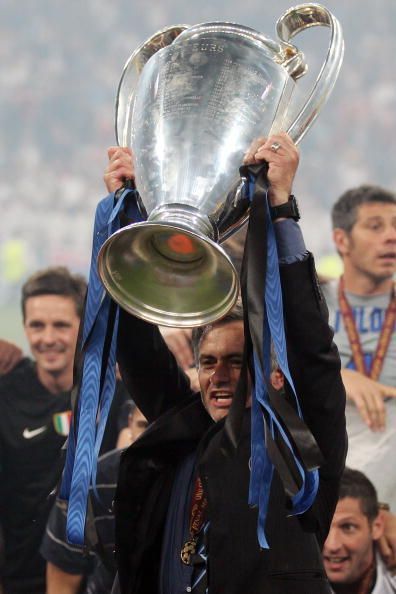
Jose ended up winning the LaLiga, the Copa Del Rey and the Spanish Super Cup in his time at Madrid. However, it was his failure to land La Decima, the trophy craved above all others, which led to eyebrows being raised.
His time at Real Madrid was thoroughly marred with controversies, some with the media and some with the club’s ace players. Mourinho famously (or infamously) caused a stir when he kept dropping Casillas in favour of Diego Lopez. He also had numerous run-ins with Sergio Ramos and the club’s talisman, Cristiano Ronaldo. While his point of contention with Ramos was the treatment being afforded to Casillas, his conflict with Ronaldo was over the latter’s reluctance to adopt Jose’s methods.
While clubs like Chelsea and Inter Milan didn’t really mind the style of play as long as the trophies kept piling up, a club like Real Madrid had an identity to maintain. At the Bernabeu, Mourinho was expected to produce a certain brand of football, an attacking and expansive brand that Real Madrid had become synonymous with.
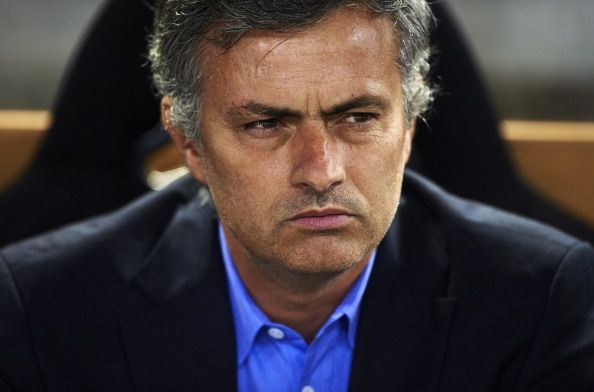
With the big-profile players and the big-profile manager clashing regularly, the only viable casualty was the manager. Hence, when he fell short in the Champions League semi-final for the third successive year in 2013, the writing was on the wall for Jose him. After the defeat to Dortmund in 2013, he famously quipped that he was loved by one club in particular. All roads then led to West London and Jose was back to rekindle his love affair with Stamford Bridge.
Amidst all the tumultuous tension in Madrid, Jose arrived in London and claimed to be the ‘happy one’. In his first season back, on-pitch performances weren’t up to standard and he ended the season uncharacteristically trophy-less. The only constant theme throughout the season was Jose claiming that his side wasn’t the finished product yet and his team would only be able to show its true colours in the following season.
Jose stuck to his promise and delivered a Premier League and a League Cup in the 2014-15 season. Chelsea were a notch above their peers in the league and strolled to the title, thus reinforcing the belief that Jose’s tenure in Madrid was only a slight blemish in an otherwise spotless career. However, everything was to turn pear-shaped in his third season.
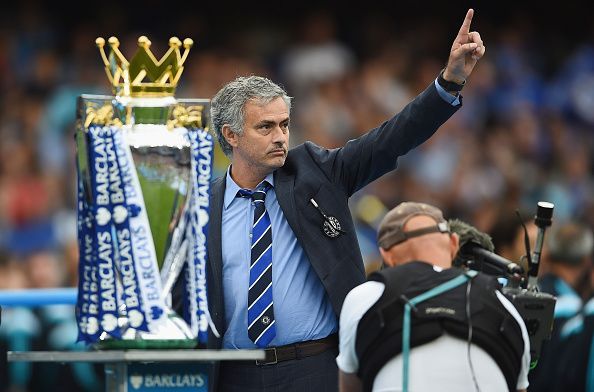
Three years on from losing the dressing room at Madrid, Jose had lost the trust of his players at Chelsea. He had similar ego clashes with the likes of Fabregas, which meant the team wasn’t united in their effort to move forward. In addition to the clashes, he also openly criticised numerous players. An act which didn’t go down well in the dressing room.
In the first season, he took time to ingrain his philosophy and integrate his new additions into the squad. The likes of Ozil, Carvalho, Di Maria and Khedira took a year to bed in at Real Madrid before playing crucial roles in their La Liga triumph. Similarly, he needed three transfer windows to establish his spine at Chelsea. While his midfield enforcer, Matic arrived earlier in January 2014, Diego Costa, Fabregas and Courtois arrived in the summer of 2014. With his preferred personnel in his bag and the team dancing to his tunes, Jose marched towards the title.
At Real Madrid and his second coming at Chelsea, the second season was his most decorated, before everything fell apart in the third. A pattern, which was masked earlier, got unveiled and hence the ‘Third Season Syndrome’ was coined. Though the trend is evident, what has caused Jose to falter in his third seasons?
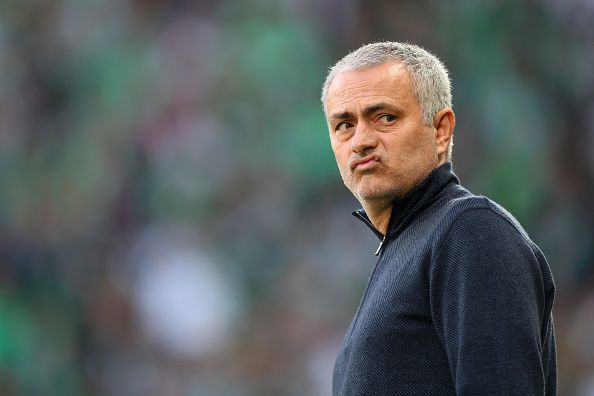
Jose is a demanding taskmaster. He pushes his players to give more than a hundred per cent each time they take the field while adopting a pragmatic approach. The approach would ask the players to curtail a few their attacking instincts in order to lend shape and solidity to the team. Despite the success of the second season, Jose would still demand the players to be reactive rather than being proactive, consequently, sowing the seeds of discontent. A season of capitulation would follow and he would face the sack.
His approach isn’t only limited to hard-work on the training pitch. On numerous occasions, one would find him ‘constructively’ criticising his players, in order to extract the last ounce of energy. While this tactic reaps massive rewards at the beginning, the more he uses it, the staler it becomes.
By the start of the 2016 season, Jose’s shortcomings had been highlighted all over the back pages. However, Manchester United were still prepared to take the gamble on him despite the short-term nature of his spells and the wreckage he leaves behind. While the whole world saw a manager with a huge ego, the United hierarchy found in him a tactical adeptness, which could enable him to write his own chapter in the Old Trafford history books. The result: Jose was back in the Premier League, not in West London, but in the red half of Manchester.
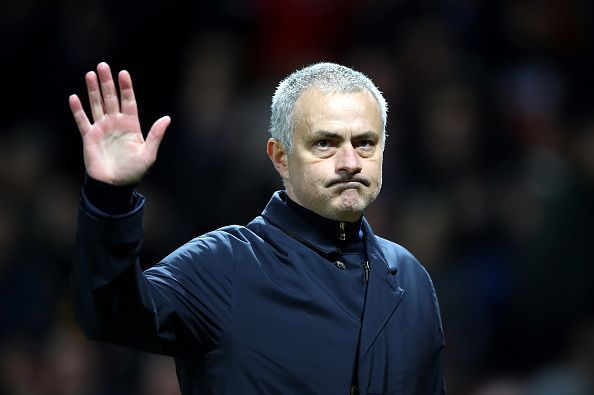
A Manchester United home game, a scrappy performance, a disgruntled home crowd and an ‘on-edge’ Jose Mourinho perfectly translate Manchester United’s endeavours at Old Trafford since the turn of the year. The negativity reached a crescendo after their abject 3-0 surrender against their top-four rivals, Tottenham Hotspur.
The major difference between his current stint and his earlier tenures at Chelsea and Real Madrid is the lack of a league title. Instead of a bell curve, his graph has been flatlined at most, if not sloping down. Though he finished second last term, the team looked a world away from eventual champions, Manchester City. Even after a couple of seasons, Jose hasn’t settled in on his best starting eleven, which has led to constant chopping and changing, destabilizing the team.
Additionally, Jose has found it hard to maintain a proper balance between youth and experience. The likes of Shaw, Martial and Rashford haven’t progressed as anticipated while defenders such as Lindelof always look like a catastrophe waiting to unravel. Above everything else, it is his failure in the transfer market which has led people to question if the Special One is still special anymore.
He has made similar ludicrous statements in the past as well to divert the attention from his team’s woeful performance. This was repeated in March 2018, after crashing out against Sevilla in the UCL and repeated it after the loss to Spurs. The baggage Jose brings with his press conferences and his ‘constructive’ criticism might just outweigh the positives of winning.
At clubs like Real and Manchester United, winning with panache is the norm. If Jose is unable to find his magic of previous years, he could well end up without a job by the time the 2019-20 season rolls in. Though the hierarchy still backs him, how long can they resist Manchester United not playing the ‘Manchester United way’?
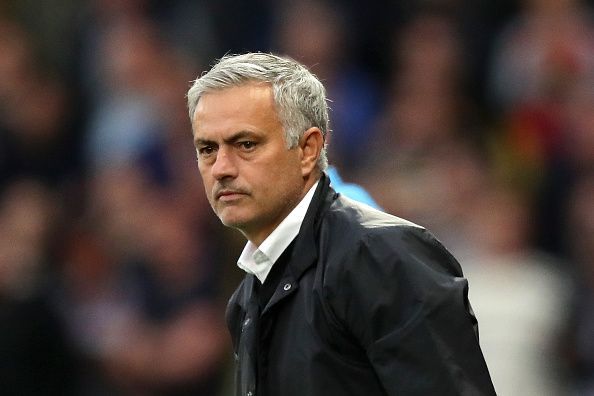
Thus, Jose’s managerial career can be divided into two halves: the all-conquering, calm Jose before his move to Real Madrid and the successful yet edgy Mourinho after. Jose has developed a sense of being the best manager in the world, a sense which has led to him having several fallouts at the biggest clubs with the biggest players. The Third Season Syndrome started having a profound impact in the second half of his career.
At Old Trafford, the situation isn’t any different. He has an uphill task to redeem himself. The earlier he arrests the slide, the quicker United could target the pinnacle of the table. Though Jose doesn’t boast of a good track record when it comes to pulling teams out of a rut, he would hope, for his own sake, that he can set the record straight and come up with the goods when it matters.
Mourinho needs to dig deep into his mental reserves and adopt a more positive approach. Though he might be disappointed by the lack of signings, he can take a leaf out of Pochettino’s book and work with what he has. Though he might end up making a statement by highlighting himself as the victim, he will cause irreparable damage to the atmosphere around the club. The need of the hour for him is to make people remember his team’s performance on the pitch rather than his performance in the conference room.