
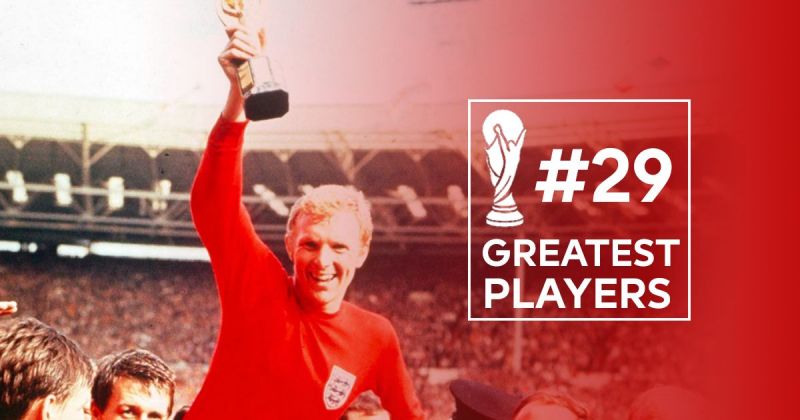
Bobby Moore was widely recognised as one of the greatest defenders and led England to their only World Cup win in 1966.
Moore joined West Ham United in 1956 at the tender age of 15 and soon broke into the first-team, making his debut in 1958 against Manchester United to begin what eventually turned out to be one of the most glorious careers the sport has witnessed.
A slow but expert defender, Moore’s reading of the game was almost unparalleled and allowed him to negate his lack of pace. Unlike most other defenders, Moore relied on positioning and his reading of the game to avoid making hard tackles to win the ball back.
Such was his significance on the pitch and influence on the game, that legendary Brazilian footballer, Pele, when asked who the toughest defender he ever faced was, said:
I can mention Beckenbauer who used to play for Germany and Bobby Moore when we played against England. I think those two players. Different style because Beckenbauer used to play more to control the game but man to man, the best was Bobby Moore. No doubt.”
For England, Moore was first called up to the English U-23 squad in 1960 before making his debut for the senior side in 1962. Just a year later, as a result of an injury to regular captain, Jimmy Armfield, he was handed captaincy of the side for the game against Czechoslovakia at the age of just 22, becoming the youngest player ever to captain England.
On the international level, Bobby Moore captained England to the 1966 World Cup in what has turned out to be the country’s only successful campaign in the grand quadrennial event.
The 1966 World Cup
In early 1966, just months before the World Cup, Moore found himself embroiled in an ugly stand-off with West Ham, having allowed his contract at the club to expire while simultaneously hesitating to sign a new one.
Subsequently, Moore re-signed with West Ham, giving himself the opportunity to not just play in the World Cup, but to also captain England in their greatest ever international run.
In the quarter-finals, they took on Argentina in front of a 90,000+ strong audience at Wembley, with both sides looking like strong contenders to proceed. At the end of a well-fought match, Moore’s English side emerged triumphant, knocking out the Argentinians.
Notably, Eusebio and Portugal managed to create very little in that game and eventually bowed out after a 2-1 result sent England to the finals where they were to face West Germany in the final.
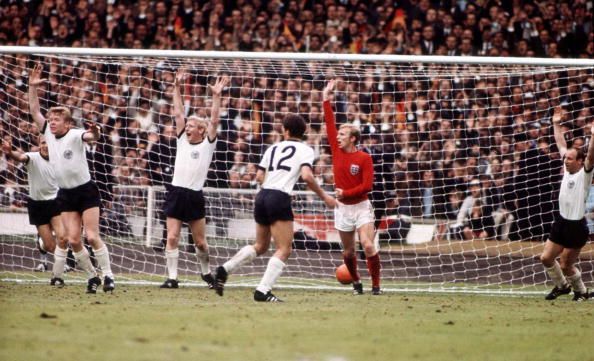
In the final, Moore and co were quickly pushed onto the back foot as West Germany opened the scoring as early as the 12th minute, as Helmut Haller took advantage of a rare misunderstanding between the English players.
Eventually, the game dragged into extra time as normal time ended with the scoreboard displaying a 2-2 result before Hurst scored his second of the night to give England a 3-2 advantage in the 101st minute.
England may not have been the best side to have won a World Cup, but Bobby Moore’s presence and performance ensured that The Three Lions eventually lifted the Jules Rimet trophy (the former World Cup trophy)
He also went on to represent England in the 1970 World Cup, where they finished as quarter-finalists.
